

staying connected is an active process…
Knowing what makes us tick – how we’re most likely to think, feel and behave in particular situations or towards certain characters is important information. It’s also one of our first targets when we think about staying connected.

Most of us, most of the time probably make connections without ever needing to think about how it happens. It’s only when connecting feels tricky that our self-awareness comes into play. Why? Because sometimes affinity bias may be part of the issue. Naturally, most of us feel most comfortable with those who either see the world as we do, or display similar behavioural traits to us.
When we’re connected with people like us, we feel right - it’s just everyone else who has it wrong, and we’ll find evidence to prove it.
This is where Carl Jung’s work, which we briefly explored together, can be useful. His simple labels are easy to recognise, and suggest how small adjustments to our style can help us stay connected with those wired differently to us – or whose professional roles steer them to behave in particular ways.
Jung identified four core social styles - amiables, analyticals, expressives and drivers. While many of us may not fit neatly into any one type, there may be dominant traits we can recognize in ourselves and others. Knowing where such traits may help or hinder our professional connections is a real advantage. Remind yourself of the characteristics of each...
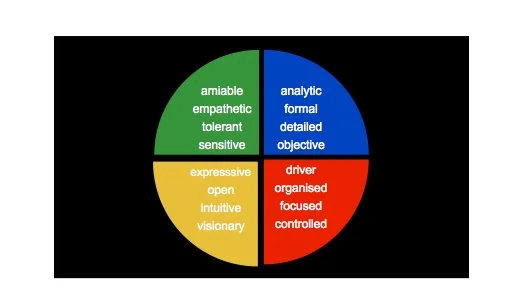
Analyticals
feel comfortable when the facts stack up – information is their comfort zone. Reasoned argument, substantiated by convincing statistics is necessary before they make decisions. Their preference for detail and clarity means they are systematic, well organised and deliberate. Uncomfortable with abstract concepts or wooly rhetoric, they may be perceived as cautious...
logical
conventional
precise
objective
trustworthy
disciplined
careful
precise
Amiables
are always conscious of feelings and connections. Aware of those who need to be involved or consulted, as well as those who will need to be handled sensitively, they naturally expect the same from others. Diplomatic by nature they are empathetic - as a result they often say yes, sometimes at their own expense. Tolerant of others, they dislike uncertainty and may shoulder lots of responsibility. They are often...
sympathetic
team players
considerate
patient
supportive
congenial
sensitive
mature



expressives
are often positive and sociable – vocal about their feelings that may also be leaked out via their tone and body language. They don’t do detail, preferring a more broad-brush approach. Fast moving, passionate about ideas, they may be drawn to abstract concepts and creative approaches. They can be viewed as influential, pushy or manipulative or...
outgoing
energetic
impulsive
charming
creative
verbal
convincing
dramatic
impulsive
drivers
are often natural leaders. Results–driven, they are clear about the bigger picture. Their clear vision helps them to get the job done within budget and for targets to be met, - despite potential casualties on the way. As pragmatists they can be frustrated by slower, softer approaches or those who offer too much detail. Instead, they could be described as being forceful characters...
decisive
problem-solvers
direct
risk takers
competitive
independent
strong willed
determined
In summary, if we want to stay connected we need to stay mindful of who we are speaking with and how they might be viewing things.
listen for clues...
Which type talks about specifics, possibly at length, is cautious about flimsy opinion and feels more at home with facts than feelings?
Who is usually gregarious, expressive and enthusiastic, possibly flamboyant in appearance, shares their views and opinions easily?
Which type is kind, empathetic and a great listener and is usually sensitive to the feelings of others?
Who is clear, decisive, bold and forthright and may also come across as abrupt and challenging?
read the signs...
When we are able to read others, when we notice how they communicate their ideas and relate to other people, clearly we are much better equipped to find ways to stay connected.
Drivers usually prefer you to be clear, aligned and brief.
Amiables will best respond to those sensitive to politics and feelings.
Analyticals are most convinced by those who are on top of the facts and details.
Expressives will be engaged by your passion and energy and by being involved in some way.
develop double vision
When you consider the issue from their perspective - whether you agree or not, you also have the key to turning things around.
Letting the other person know that you acknowledge their viewpoint is the first step towards resolving differences.
Alternatively, we keep doing what we do, because we are creatures of habit - and our connections are hit and miss. We tell it how it is, as that’s how we like it. Full stop.

Or, we say nothing, suffer in silence, because we don’t want to offend anyone. Or, when we’re writing, we explain every aspect of a complex issue. Or, we always get straight to the point as we can’t bear waffle. Or, we express our ideas enthusiastically without sometimes backing them up with structure and logic ? Or, none of the above, because we’re proactive about checking in with ourselves and each other.
Certainly, if we allow ourselves breathing space in our busy lives, it’s much easier to find solutions to trickier communications. In most case if we start by acknowledging what’s important to the person we’re communicating with, it usually encourages them to do the same. This doesn’t mean we’re binning our perspective, rather that both parties get to hear what’s going on with the other so that bridges can be built - or else, partially re-surfaced where necessary.
Focusing on poor connections - because as we said, great connections look after themselves - if there is A.N.Other who seems to overlook issues important to the organisation, or to you personally, try to take a pause before you respond in haste. Buy yourself some time. Stay rational, get back to them later. Think about what the scenario may look like from their perspective - or more radically ask them! Finding out is often the first step to exploring a solution together.
Back to those social styles again – how we say what we say is three times more impactful than what we say, so maybe it’s worth pondering the Platinum Rule.
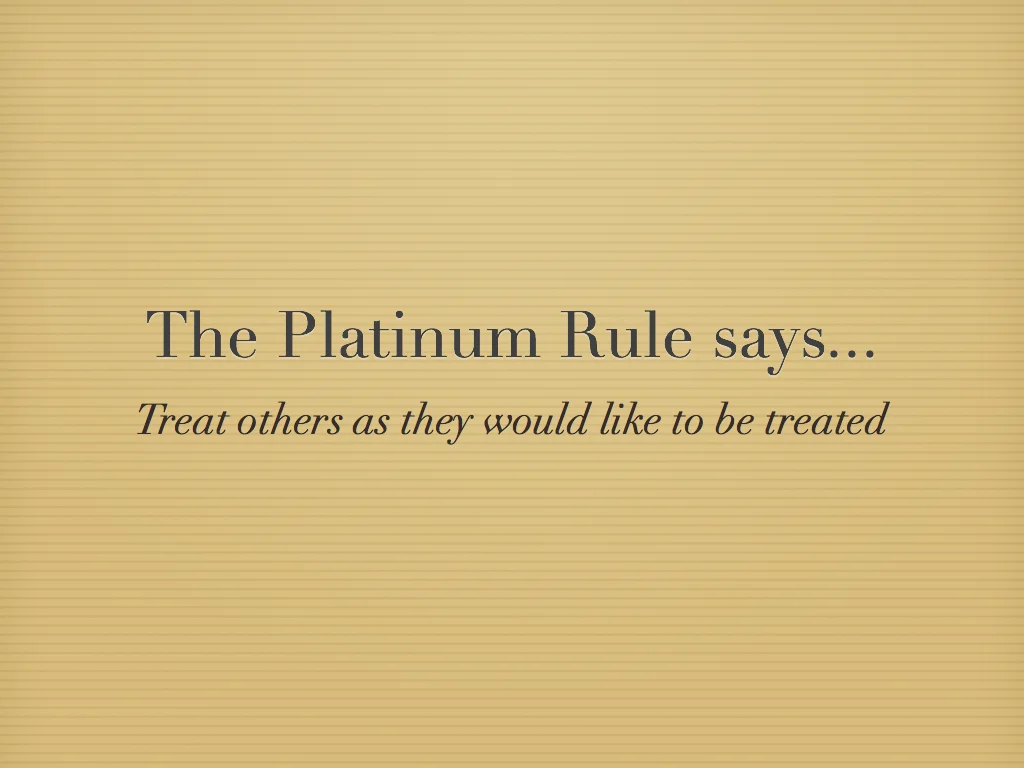
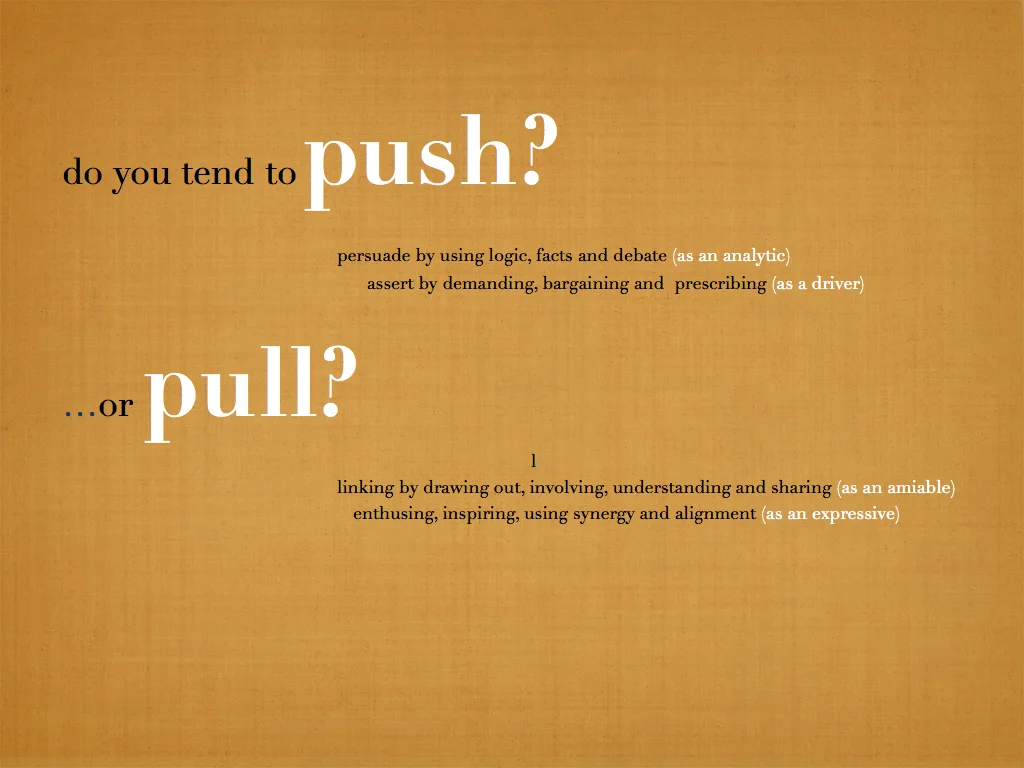
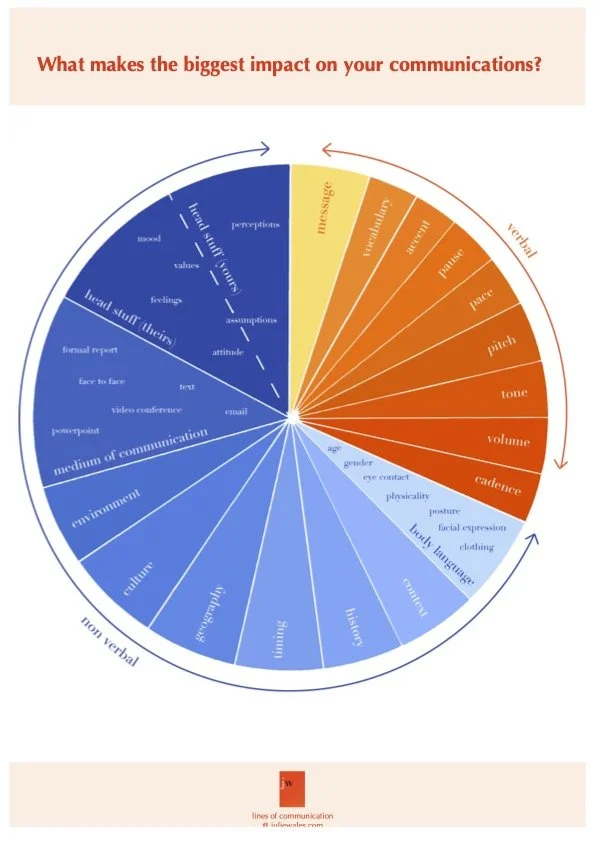
As we explored, the biggest impact in keeping things joined up is actually all the unspoken influences that affect the dynamic. The good news is, we can often pre-empt miscommunications or misunderstandings by reading these undercurrents.
If you’re up for it, let’s try a quick experiment. Think back to a personal or professional situation where connecting was tricky. Looking at the pie-chart below - can you find any unspoken stuff that could have been addressed to help the situation?
For example, was your last encounter difficult - so history played a part? Or where geography and differing local expectations made things problematic? Or where the particular medium of communication was hampering the situation? For example, where a telephone call or even a face-to-face meeting over a coffee could have helped develop your professional connection?
We appreciate many people may not be as interested in this stuff as we are, or simply don’t have time in their busy lives to ponder the reasons why their communications may not be landing in the way they intended, so we’ll leave the last words for now with Aristotle. Yes, seriously! His advice seems as relevant now as it was over two thousand years ago, when he suggested that to be our most influential and stay connected we need to consider three core appeals - to ethos, logos and pathos.
We’ll leave you to ponder how they could apply to modern day you:
1. How closely do you align with NRW’s ethical expectations and codes of practice?
2. Is your logical reasoning as clear as it could be?
3. Do you actively display your empathy for others in the way you communicate?